
Best Bibs for Drooling Babies in Singapore (2026)
Choosing the best bibs for a drooling baby is a different problem from choosing a feeding bib. Drool arrives slowly, all day, every day — and in Singapore's humidity the bib has to take that saliva off the skin and dry fast enough to be back in the drawer by evening. Here's how to pick, how many you need, and how to keep drool rash away.
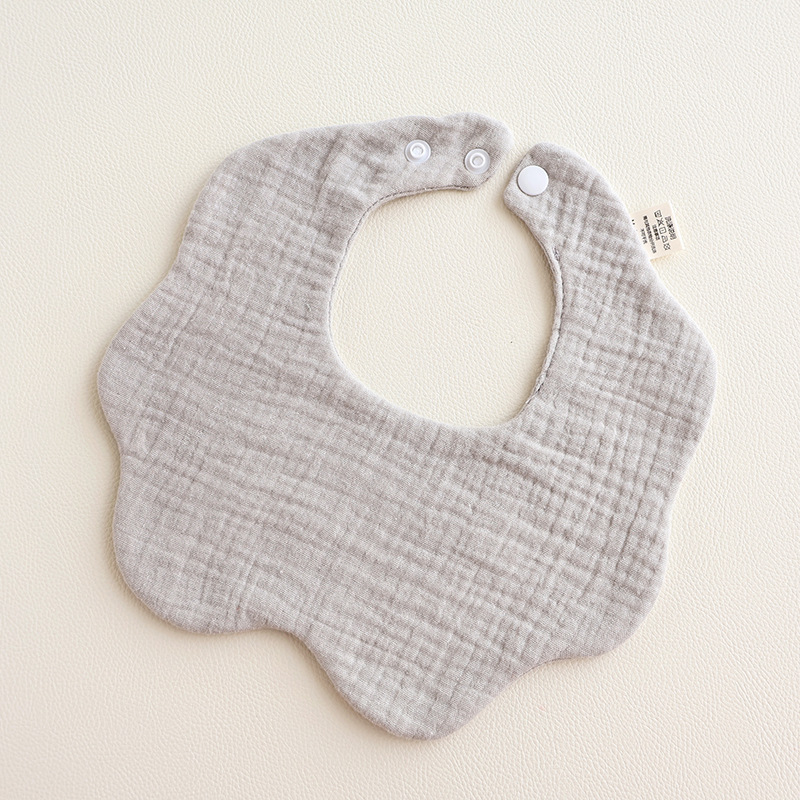
The best bibs for drooling babies in Singapore are soft multi-layer cotton muslin bibs with a snap closure. Muslin lifts saliva off the chin, holds it away from the skin, and — because the weave is open — dries in a few hours here instead of sitting damp all day like terry towelling. Skip waterproof and silicone bibs for drool; they belong at mealtimes. Buy 10–12 so there is always a dry one, change the bib when it feels damp rather than when it looks wet, and never wash bibs with fabric softener. AEBaby's Plain Muslin Bib is S$5.99 and the double-layer snap bib S$5.99, both with free name embroidery.
- Drooling typically starts at 2–4 months and peaks through the teething months, 4–12 months
- A heavy droolier gets through 6–10 bibs a day
- Working number for a Singapore household: 10–12 bibs, or 14 if you wash every other day
- A muslin bib dries in about 4–6 hours on an HDB drying rack; terry towelling can take a full day
- Fabric softener is the No.1 reason bibs stop absorbing
- Drool rash comes from saliva sitting on skin — change on damp, not on wet
- 14 plain muslin bibs = S$83.86, which clears the S$80 free-shipping line
Why a Drool Bib Is a Different Product
Most bib reviews are really feeding-bib reviews. A feeding bib has one job for twenty minutes: catch what falls and wipe clean afterwards. A drool bib is worn for eight or ten hours, sits directly against the chin and the neck folds, and deals with a slow, steady trickle rather than a sudden spill.
That changes what "good" means. Wipe-clean surfaces are useless — saliva that cannot soak in simply runs down onto the romper. A stiff edge that is unremarkable at dinner becomes a rubbing point by mid-afternoon. And a bib that holds a lot of moisture but releases it slowly is actively worse than one that holds less and dries fast, because you own a fixed number of bibs and they all have to come round again tomorrow.
So the ranking for drool is: absorbs quickly → keeps the moisture off the skin → soft against a chin that may already be irritated → dries fast enough to stay in rotation. On that list, humble cotton muslin beats every clever fabric on the shelf. If you are still deciding on bib types generally, our complete baby bibs Singapore guide covers the whole range; this page is only about drool.
When Drooling Starts, Peaks and Stops
Knowing the timeline is what stops you buying twice.
- 0–8 weeks: very little drool. Newborn bibs are mostly for milk dribble and posseting after feeds. Six to eight bibs is plenty.
- 2–4 months: the salivary glands step up, but swallowing has not caught up. This is when the shoulder of every top starts feeling damp and parents suddenly go looking for a "dribble bib".
- 4–7 months: teething typically begins, and drool production rises sharply. This is the point at which most families here move from eight bibs to twelve. See when teething starts and the early signs for what else to expect.
- 7–18 months: the heaviest, longest stretch. Crawling and cruising add sweat to the mix, and the bib is now doing two jobs.
- 18 months – 3 years: drool tapers as the molars finish and swallowing matures. Bibs move back to mealtimes only.
Two caveats worth stating plainly. Heavy drooling on its own is normal and not a sign that anything is wrong. But drooling that arrives with a fever, refusal to feed, difficulty swallowing, or a baby who suddenly cannot settle at all is worth a visit to your paediatrician or the polyclinic — that is a different picture from teething. Our baby teething guide sets out which symptoms belong to teething and which do not.
Five Things to Check Before You Buy
Product pages rarely tell you any of this directly, so it is worth knowing what to look for.
- Layers, not thickness. Multi-layer muslin — typically two to four gauze layers — beats one thick layer of anything. Each layer wicks into the next, which is what moves saliva away from the chin rather than parking it there.
- Coverage below the collarbone. Drool runs downwards. A bib that stops at the chest gap lets it land straight on the neckline of the romper, which is how you end up changing the whole outfit at 10am.
- Snap closure, sized to grow. Two or three snap positions let the bib sit close enough to catch drool at three months and still fasten at fourteen. Velcro is quick but roughens after a few dozen washes and catches on muslin in the machine. Our baby bib size guide by age shows how to measure the neck and when to move up a snap.
- Nothing hard at the neckline. Feel the fastening with your thumb. If it presses into your skin, it will press into a neck fold that is already damp.
- Dry time, honestly assessed. Ask yourself how the fabric behaves on a rainy Singapore week with no sun on the rack. If the answer is "still damp tomorrow morning", you need to own more of them — or choose a fabric that dries faster.
Bib Types Ranked for Drool
All five of these are sold as baby bibs in Singapore. Only some of them are drool bibs.
| Bib type | Absorbency | Dry time in SG | Against the skin | Verdict for drool |
|---|---|---|---|---|
| 🏆 Multi-layer cotton muslin | High — wicks between layers | 4–6 hours on a rack | Softens with every wash | Best all-day choice |
| Muslin bandana bib | Medium — smaller area | 3–5 hours | Same fabric, less coverage | Good for outings, soaks through faster |
| Terry / towelling bib | Very high — but holds it | Up to a full day indoors | Warm; can feel heavy | Workable, but rotation suffers |
| Waterproof-backed (PUL) | Front layer only | Fast — nothing gets through | Traps heat and sweat | Keep for messy meals |
| Silicone bib | None | Wipe dry | Stiff edge at the chin | Weaning only, from 6 months |
Bamboo deserves a mention because it markets heavily on absorbency. It genuinely holds more water per gram than cotton — and that is exactly the problem for a bib you need back tomorrow, because it also gives that water up more slowly. We ran the numbers on drying time, softness and cost per wear in our cotton vs bamboo baby bibs comparison.
Singapore's Humidity Changes the Answer
This is the part that overseas buying guides cannot help you with. Relative humidity here sits around 80–90 per cent for much of the day and rarely drops below 60 per cent even in the afternoon. Two consequences follow, and both point the same way.
Nothing evaporates off the skin. In a dry climate a damp bib is a mild nuisance because the moisture lifts away on its own. Here it simply stays, and skin that stays wet under a warm fold is skin that gets irritated. That is why "change the bib when it feels damp" is genuinely different advice in Singapore from the same sentence written in London.
Laundry turnaround is your real constraint. A muslin bib pegged out in an HDB service yard or on a bamboo pole comes back dry in roughly four to six hours with some breeze. During a monsoon week, or drying indoors in an air-conditioned room, it can be the next morning. Terry can be twenty-four hours. Nobody plans their bib purchase around laundry, and everybody should — the number of bibs you need is really the number of drool changes per day multiplied by the number of days between washes.
There is a related aircon effect worth knowing. Babies who sleep in an air-conditioned bedroom often drool more visibly at night simply because the mouth stays open in the drier air, so the pillow side of the neck gets wet. Take the bib off for sleep — nothing should be fastened around a baby's neck in the cot — and instead pat the chin and neck crease dry at bedtime and again at the night feed; that prevents the classic morning discovery of a red crease under the chin. Muslin's fast drying is what makes muslin so suited to Singapore generally, not just for bibs.
Preventing Drool Rash and Neck-Fold Rash
Drool rash — the red, slightly rough patch on the chin, around the mouth or in the neck crease — is caused by saliva and friction sitting on the skin, not by drooling as such. The bib is the main tool for preventing it, but only if it is used the right way.
- Pat, don't wipe. Repeated wiping with a rough cloth does more damage than the saliva. A soft cotton muslin handkerchief (S$2.00) is worth keeping in the nappy bag for exactly this.
- Open the neck folds. Chubby three-month-old necks hide a lot. After naps and after time in a carrier or sling, gently open the crease and dry it.
- A barrier before sleep. A thin layer of a plain barrier ointment on the chin at nap and bedtime stops saliva reaching the skin during the longest unattended stretch.
- Give the skin air. Ten bib-free minutes in a cool room, drooling onto a folded muslin cloth on your shoulder instead, does more good than any product.
- Fragrance-free everything. Detergent residue on a bib that is pressed against irritated skin all day is a needless extra irritant.
If a rash weeps, blisters, spreads well beyond the drool zone, or simply is not settling after a few days of careful bib changes, have a doctor or your polyclinic look at it. Eczema and fungal rashes in the neck folds are common here and look similar at first glance, but they need different treatment. Parents managing sensitive skin may also find our notes on safe baby products for sensitive skin useful.
Our Picks for Drooling Babies
These are the AEBaby pieces we actually recommend when a parent messages us saying "she's soaking through everything". Every bib below is 100% cotton muslin, and every bib includes free name embroidery — which matters more than it sounds once bibs start travelling to infant care and back, because unlabelled bibs come home belonging to someone else.
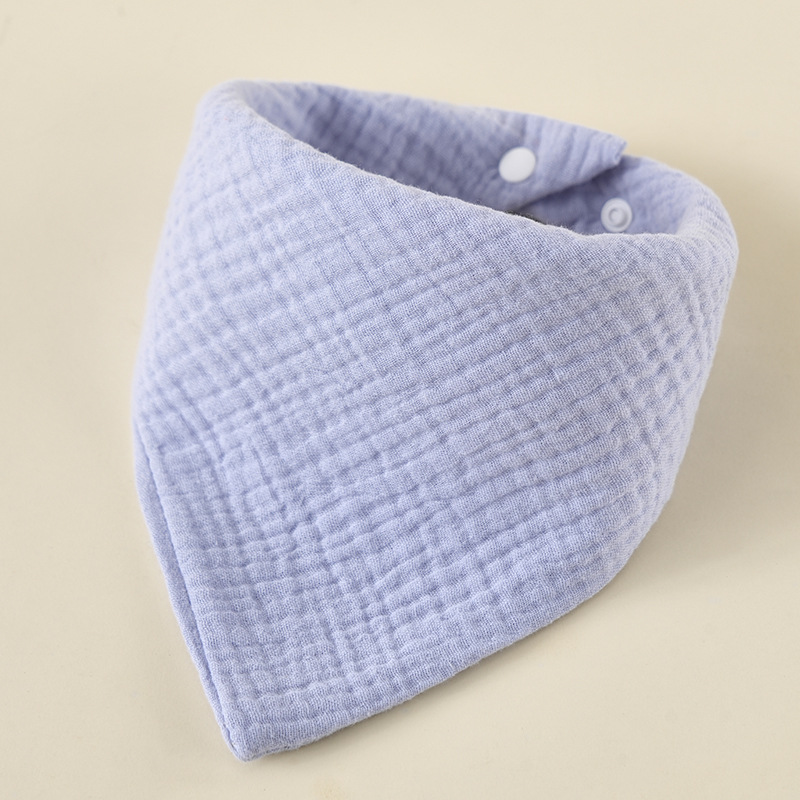
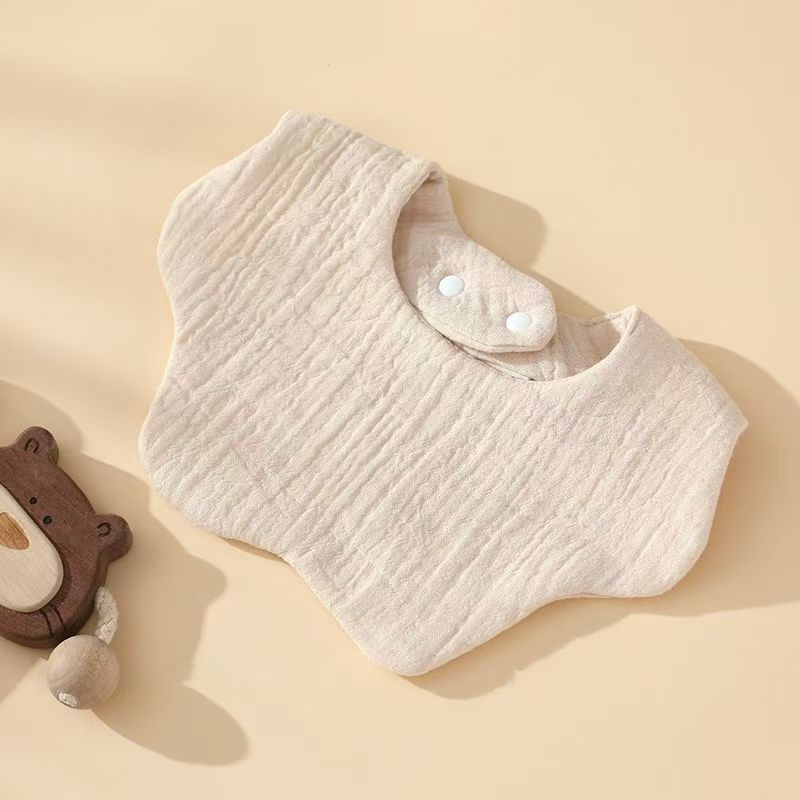
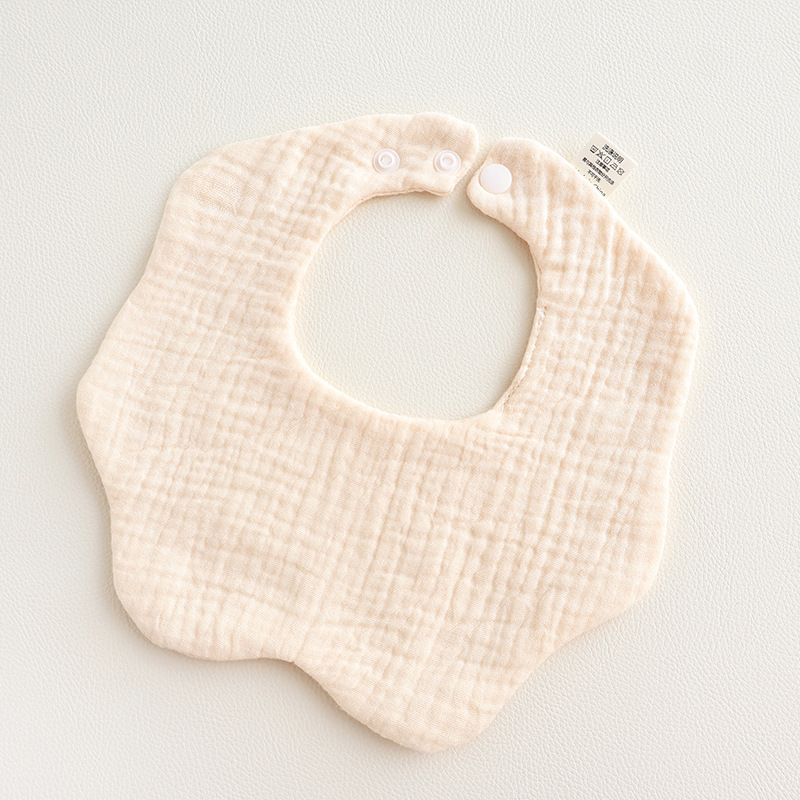
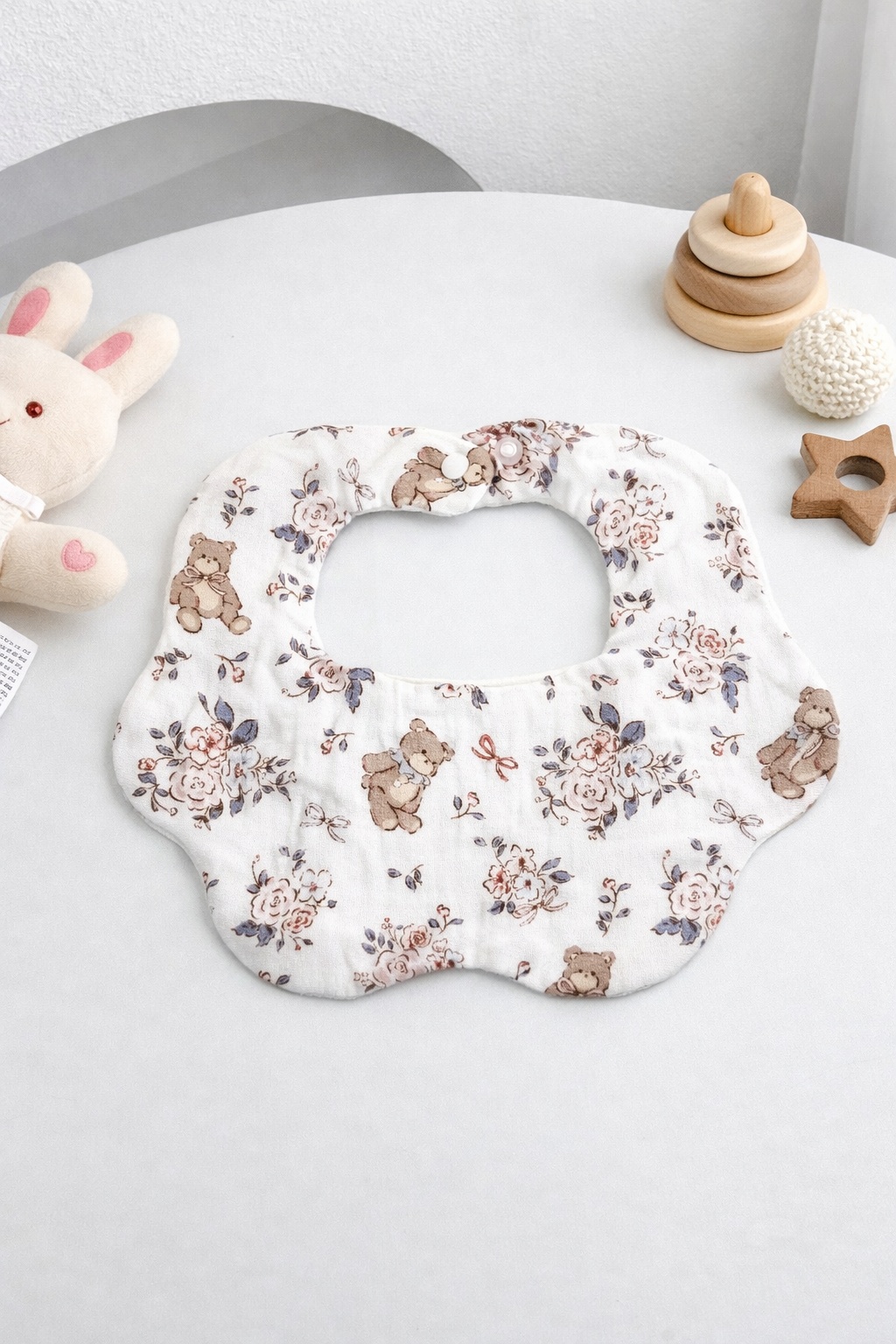
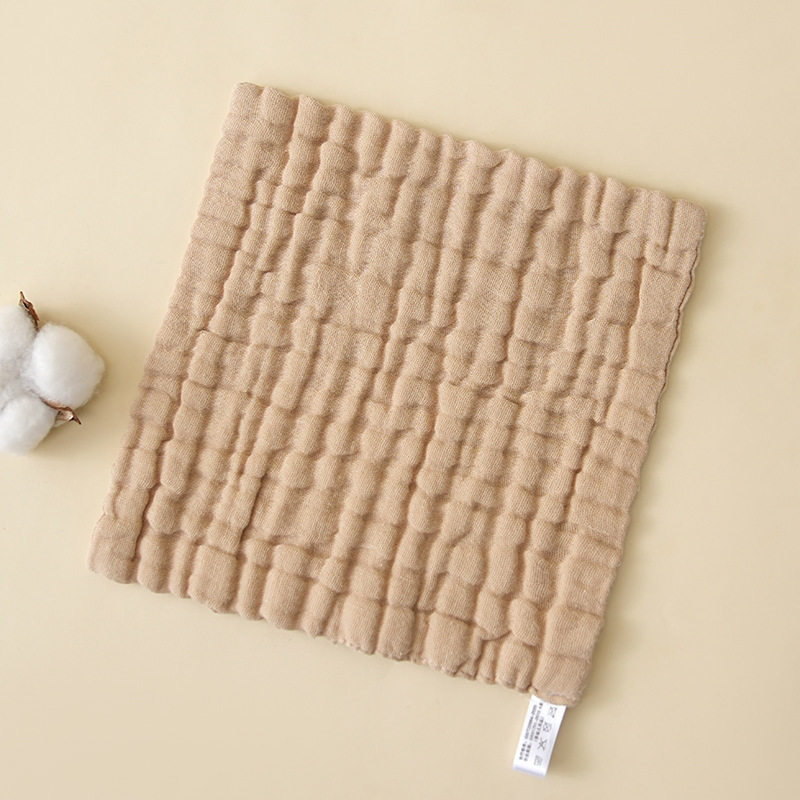
Colour is a practical decision here, not only an aesthetic one. Mid-tones — pebble grey, beige, soft green, blush — carry a drool mark to the end of a day far better than white, which is why they are the ones parents re-order. If you are buying for a girl specifically, the full pink and floral range sits on our baby girl bibs page; the whole bib range is on shop bibs.
How Many Bibs a Droolier Really Needs
Work it backwards from your washing machine rather than from a number on a checklist.
| Stage | Changes per day | Wash daily | Wash every 2 days |
|---|---|---|---|
| Newborn (0–2 months) | 3–4 | 6 bibs | 8 bibs |
| Dribble stage (2–4 months) | 4–6 | 8 bibs | 10 bibs |
| Heavy teething drool (4–18 months) | 6–10 | 10–12 bibs | 14 bibs |
| In infant care | +3–4 in the bag | add 4 spares | add 4 spares |
Two Singapore-specific adjustments. If your baby is in infant care, the centre will ask for a labelled daily set that stays there — build those into the count as extra rather than borrowing from the home rotation, and get the name embroidered so they come back to you. And if grandparents or a helper look after the baby on weekdays at a second home, that household needs its own small stack; ferrying bibs across the island each evening is how families end up short on a Wednesday.
Washing So Bibs Stay Absorbent
A drool bib that has stopped absorbing has almost always been treated, not worn out. The fix is usually free.
- No fabric softener, ever. Softener leaves a waxy film on the fibres — that film is what makes towels stop drying you and bibs stop absorbing drool. Dryer sheets do the same.
- Wash at 30–40°C on a gentle cycle with a fragrance-free detergent. Hot washes are rarely needed and shorten the life of the cloth.
- Rinse a soaked bib before it goes into the basket. In 85 per cent humidity, a drool-wet bib sitting in a covered laundry basket for a day develops that sour smell and, in the worst cases, mildew spots.
- Strip the residue if absorbency drops: one wash with a cup of white vinegar in the rinse compartment and no detergent usually restores it within a cycle or two.
- Line dry in the shade. Full Singapore sun is a decent natural sanitiser but fades coloured muslin and any embroidered name faster than washing does.
- Don't overload the machine. Bibs need room to rinse; crowded loads leave detergent behind, which stiffens the cloth.
- Skip the fabric conditioner on new bibs too. Muslin reaches its softest after four or five washes on its own — that is the fabric relaxing, and it happens faster without any coating on it.
For the full routine — the first wash, a stain chart for milk, purée and confinement soup, drying times on a Singapore rack, and the vinegar strip wash that restores absorbency — see our guide to how to wash and care for muslin bibs.
Six Mistakes Worth Avoiding
- Buying four bibs "to see how it goes". Four bibs during teething means washing daily and still running out by Sunday. This is the most common message we get.
- Using a feeding bib all day. A wipe-clean surface against the chin for ten hours is a rash waiting to happen in this climate.
- Waiting for the bib to look wet. The damage is done at the top edge, where you cannot see it.
- Softener in the wash. Worth repeating — it is the single most common reason a good bib stops working.
- Only owning pretty bibs. Printed bibs are lovely for outings; you also want a stack of plain mid-tones you don't mind seeing soaked.
- Forgetting to label them. Once bibs travel to infant care or to 公公婆婆's place, an embroidered name is the only thing that reliably brings them home. It is free on every AEBaby bib — see how name embroidery works or shop the personalised bib range.
FAQ — Best Bibs for Drooling Babies
What are the best bibs for a drooling baby?
For drool rather than food, the best bib is a soft multi-layer cotton muslin bib with a snap closure. Muslin pulls saliva off the chin quickly, holds it away from the skin, and — because the weave is open — dries fast enough to come back into rotation the same day in Singapore's humidity. Terry towelling absorbs slightly more but stays damp for hours here, and silicone and waterproof bibs are made for feeding, not drooling: they hold saliva against the skin instead of taking it away. AEBaby's Plain Muslin Bib at S$5.99 and the double-layer Boy Bib Snap at S$5.99 are the two we recommend most for heavy droolers.
How many bibs does a drooling baby need in Singapore?
Plan for 10 to 12 bibs once heavy drooling starts, and 14 if you only run the washing machine every other day. A heavy droolier goes through six to ten bibs a day, and in Singapore a washed muslin bib needs roughly four to six hours to dry on a rack in an HDB service yard — longer on a rainy week or in an air-conditioned room. Twelve plain bibs at S$5.99 comes to S$71.88, and fourteen to S$83.86, which clears the S$80 free-shipping line.
At what age do babies drool the most?
Drooling usually begins around 2 to 4 months, when the salivary glands become more active but babies have not yet learned to swallow the extra saliva. It rises sharply from around 4 to 6 months as teething begins, and stays high until the molars finish coming through, often somewhere between two and three years old. The heaviest stretch for most Singapore families is 4 to 12 months — that is when parents typically double the number of bibs they own.
Do bandana bibs work for heavy droolers?
They work, but they hold less. A bandana bib is triangular and smaller, so it covers the chin and upper chest well and looks neat in photos, but a heavy droolier soaks one through faster than a full-size bib. Most parents here use both: bandana shapes for outings and photos, full-size muslin bibs at home during awake time, where the drool has hours to build up rather than minutes. Take any bib off for naps and night sleep.
How do you stop drool rash in Singapore's humidity?
Drool rash is caused by saliva sitting on the skin, not by the drooling itself, and in 80 to 90 per cent humidity nothing on the skin evaporates quickly. The fix is mechanical: change the bib the moment it feels damp rather than when it looks wet, pat the chin and neck folds dry with a soft cotton handkerchief instead of wiping hard, and check under the neck crease after naps and after time in the carrier. A barrier ointment before naps helps, and if the rash weeps, spreads beyond the drool zone, or is not settling after a few days, have a doctor or polyclinic look at it rather than treating it as ordinary drool rash.
Are waterproof or silicone bibs good for drooling babies?
Not for all-day drool. Silicone and waterproof-backed bibs are designed for weaning and solid food, where the job is to catch what falls and wipe clean afterwards. Worn for hours in Singapore, a waterproof layer traps both saliva and sweat against the chest, and the stiff edge sits awkwardly against a chin that is already sore. Keep the silicone bib for mealtimes from six months, and use soft absorbent muslin for the rest of the day.
Why have my baby's bibs stopped absorbing drool?
Almost always fabric softener. Softener works by leaving a thin waxy coating on the fibres, which is exactly what stops cotton muslin taking up moisture — the drool then beads and runs down onto the clothes instead. Dryer sheets do the same thing. Stop using both, then run the bibs through a hot-free wash with a cup of white vinegar in the rinse to strip the residue, and absorbency usually returns within a wash or two. Overloading the machine can leave detergent residue with a similar effect.
Final Thoughts
Drooling is one of the few baby phases where the right purchase genuinely makes the days easier — and it is a cheap one. Soft cotton muslin, enough of it to survive your laundry cycle, changed on damp rather than on wet, and washed without softener. That is the whole method.
Everything else is preference: colour, print, whether the name goes on the front. Get the absorbency and the rotation right, and the drool phase becomes a laundry habit instead of a daily rash to manage. 💕
Next: browse the full baby bib range, read our complete baby bibs Singapore guide for types and sizing, or see what else to expect during teething.