Baby Bib Size Guide by Age — Newborn to Toddler (2026)
Most bibs are sold as "one size", which is only half true. The neck opening, the length and the type of bib a baby needs all change between the newborn weeks and the toddler table — and in Singapore's humidity, the bib that fits badly is the one that leaves a red crease under the chin. This baby bib size guide covers what size to look for at each age, how to measure in thirty seconds, and the signs it's time to move up.
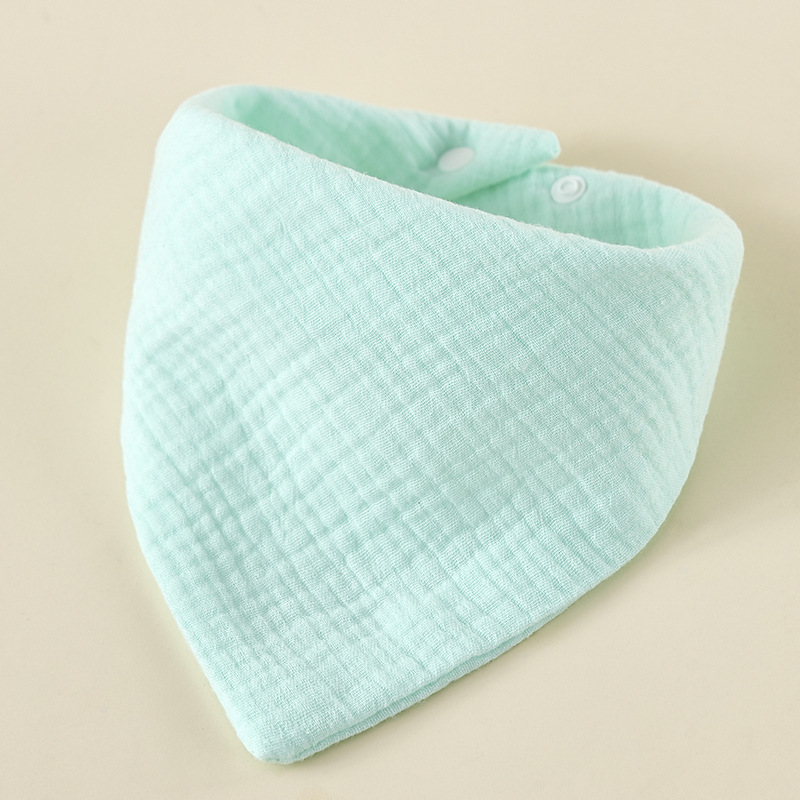
A newborn bib needs a neck opening of roughly 20–24 cm and enough length to cover the upper chest — about 15–20 cm. From 6 months, add longer feeding bibs (25–30 cm) for solids, and from about 12 months a sleeved or pocket bib for self-feeding. For drool, one adjustable snap muslin bib covers newborn to toddler: fit it so two fingers slide flat under the neckline, and always take bibs off for sleep. AEBaby's one-size muslin bibs are S$5.99 (plain and double-layer snap) and S$5.90 (printed), with free name embroidery.
- Bib fit comes down to three numbers: neck opening, length and width
- A newborn's neck is roughly 20–23 cm; by age two, roughly 25–28 cm
- Fit rule: two fingers flat between the neckline and the neck at the fastened snap
- Drool bibs are usually one size with snaps; feeding bibs and smocks are sized by age
- Go longer for food at about 6 months, and add sleeves or a pocket at about 12 months
- No bibs for sleep — naps, night-time, or dozing in the car seat
- 14 plain muslin bibs = S$83.86 — a full first-year rotation, over the S$80 free-shipping line
What "Bib Size" Actually Means
Bib labels usually give an age range or simply say "one size". Neither tells you whether it will fit your baby, because three separate measurements decide that:
- Neck opening — the circumference of the neckline once fastened. Too tight and it sits in the neck fold, holding sweat and drool against the skin. Too loose and drool runs straight down the gap onto the romper, and the bib can ride up over the chin.
- Length (the "drop") — from the neckline to the hem. For drool it needs to reach past the collarbone onto the upper chest. For food it needs to reach the tummy or, once baby is sitting in a high chair, the lap.
- Width — how far the bib reaches toward each shoulder. A wider bib catches the dribble that runs sideways when a baby turns their head; a narrower one sits neater under a carrier strap.
Age is a stand-in for all three, and not a very precise one. A nine-month-old who was born big and has a chubby neck may need the looser snap that a lean fourteen-month-old is only just reaching. That is why the chart below gives ranges — and why a tape measure beats the label every time.
Baby Bib Size Chart by Age
Treat these as working ranges drawn from typical bib and baby-clothing sizing, not as medical growth data. Babies vary a lot, so measure your own and use the chart to sense-check.
| Age | Typical neck | Neck opening to look for | Bib length | Bib type for this stage |
|---|---|---|---|---|
| Newborn (0–3 months) | ≈20–23 cm | ≈22–24 cm (tightest snap) | 15–20 cm | Soft muslin drool bib for milk dribble |
| 3–6 months | ≈22–24 cm | ≈23–26 cm | 18–22 cm | Muslin drool bib; bandana shape for outings |
| 6–12 months | ≈23–26 cm | ≈24–27 cm | 20–25 cm drool · 25–30 cm feeding | Muslin for drool + a longer feeding bib for solids |
| 12–24 months | ≈24–27 cm | ≈25–28 cm (loosest snap) | 25–30 cm pocket · 35–45 cm sleeved | Pocket or sleeved smock for meals; muslin for molars |
| 2–3 years | ≈25–28 cm | ≈26–30 cm | 35–45 cm sleeved | Mealtime smock only |
Two patterns stand out. First, the neck grows only a few centimetres between birth and age two — which is why a well-made adjustable drool bib genuinely lasts the whole stretch. Second, what changes a lot is length, because the bib's job changes: dribble at three months needs the upper chest covered, spoon-feeding at seven months needs the tummy covered, and a toddler at the table needs the arms covered too. Most "my bib doesn't fit any more" problems are really "my bib is the wrong type for this stage".
How to Measure Your Baby for a Bib
It takes thirty seconds and saves buying twice.
- Use a soft tape measure — or a length of string or ribbon that you then lay against a ruler.
- Measure at the base of the neck, where a bib neckline actually sits, not up under the chin. Do it when baby is calm, lying on their back or sitting supported, over the thin singlet or romper they usually wear at home.
- Keep the tape snug but flat — resting on the skin, not pulling in. Read the number.
- Add about 1.5–2 cm. That is the neck opening to look for, and it is roughly the two-finger gap you will check by hand.
- Measure the length you want from the base of the neck down: to mid-chest for a drool bib, to the tummy button for early feeding.
Bib Size Stage by Stage — Newborn to Toddler
Newborn (0–3 months): small neck, short drop
Newborn bibs are mostly for milk — the dribble at the end of a feed and the possets that come up during burping. The neck is short and tucked into folds, so the bib should sit on its tightest snap without a gap and stop around mid-chest; a long bib just bunches in the lap of a baby who cannot sit up yet. During the confinement month, when a confinement nanny or grandparent is doing many of the feeds, simple snap bibs that go on one-handed are the ones that actually get used. Six to eight is plenty for now — our what to buy for a newborn in Singapore list puts bibs in context with everything else.
3–6 months: drool starts, a neck appears
Around three to four months the salivary glands step up and head control arrives — and with it, a neck you can actually see. This is often when parents move out one snap. Length now matters more than width, because drool runs straight down; the bib needs to reach past the collarbone. Heavy drooling usually begins somewhere in this window, and our guide to the best bibs for drooling babies covers how many you need once it does.
6–12 months: add a longer bib for solids
Most babies here start solids around six months — rice porridge, mashed pumpkin, sweet potato — and a drool bib is simply too short for spoon-feeding. Keep the muslin bibs for drool between meals, and add two or three longer feeding bibs (25–30 cm); a wipe-clean or silicone bib with a pocket works well at the high chair, as long as it comes off after the meal. Teething often peaks in these months too (see when teething starts), so the drool stack usually grows at the same time.
12–24 months: coverage, not a bigger neck
Self-feeding — the fistful-of-rice stage at the hawker centre — needs a bib that covers the arms and lap: a sleeved smock bib or a deep pocket bib. Neck size barely moves, and the loosest snap of a good drool bib still fits most toddlers. That matters because the first molars, usually arriving between about 13 and 19 months, bring the drool back. Toddlers also discover snaps; a bib that fastens at the back of the neck is harder for them to pull off mid-meal.
2–3 years: mealtimes only
Drool tapers once the second molars are through, somewhere between two and three. Bibs move to the table: a smock for messy meals and, in many infant care and preschool classrooms, a named smock that lives in the child's cubby. By now the size question is mostly about sleeve length and whether your child can put it on themselves.
One-Size vs Sized Bibs — and Which Closure Fits Best
Drool bibs are usually sold one size because the neck changes so little; the closure does the sizing. Feeding bibs and smocks are more often sized by age, because length and sleeves matter more than the neck. That makes the closure the most important "size" feature on a drool bib.
| Closure | How it adjusts | In daily use | Verdict |
|---|---|---|---|
| 🏆 Adjustable snaps | Fixed snap positions | One-handed, sits flat, hard for toddlers to undo | Best all-round for drool bibs |
| Hook-and-loop (Velcro) | Any size | Fast, but roughens with washing, snags muslin in the machine, easy to rip off | Fine for feeding bibs |
| Ties | Any size | Fiddly on a wriggling baby; long strings are a hazard | Keep strings short |
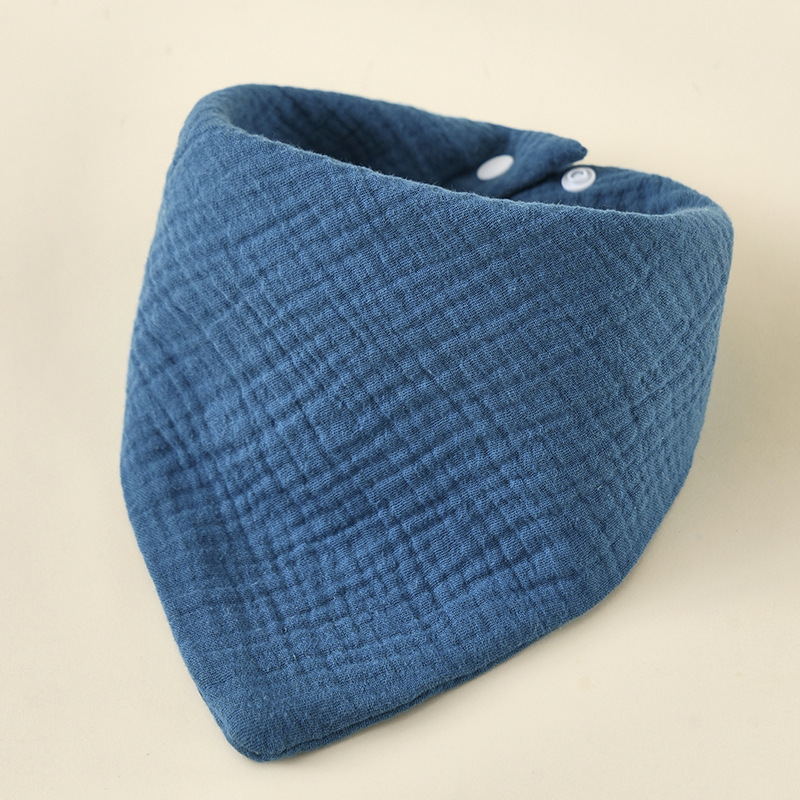
| Bandana with snaps | Snap positions | Shorter drop, neat under a carrier, soaks through sooner | Outings and photos |
| Pull-over stretch neck | None | Nothing to fasten, but has to go over the head | Toddler smocks only |
AEBaby's bibs are one size in 100% cotton muslin with a snap closure — the plain bib's snap is adjustable — and they are pre-washed, so the fit you fasten on day one is close to the fit after a month of washing. If you would like the exact measurements of a particular style before ordering — for a small or premature baby, say — message us or tap the WhatsApp button and we will measure one for you.
Fit in Singapore — Humidity, Neck Folds and Carriers
Sizing advice written for cold climates worries about keeping the neck warm. Here the problem runs the other way: at 80–90 per cent humidity, anything pressed against the skin stays damp.
- Neck folds trap moisture. A snug neckline on a chubby three-month-old sits right in the crease, where sweat and drool meet. The two-finger gap lets air in. If you see a red line under the chin after a nap, check the fit before blaming the fabric.
- Measure over what they actually wear. Babies here spend most of the day in a singlet or a thin short-sleeved romper — rarely a collar or a jumper — so measure and fit over thin clothing. A bib fitted over a thicker aircon sleepsuit will sit loose in the daytime.
- Carriers and slings. A long bib bunches under a carrier panel and holds drool against both of you. For carrier time — the MRT, the wet market, a walk round the estate — a shorter bandana-shape bib sits flatter.
- Laundry keeps the fit steady. Cotton can tighten slightly in a hot wash or a tumble dryer. Wash at 30–40°C and line-dry in the shade — the HDB service-yard rack is ideal — and the neckline stays the size you bought. Our muslin bib washing and care guide covers dry times, stains and fabric care in more detail.
- Infant care. Centres ask for named bibs that stay in a daily bag. Buy the size that fits now and for the next few months, and have the name embroidered so the bibs come home. The name sits in a stitch area about 9–10 cm wide, so it fits the same way on any AEBaby bib — see how baby name embroidery works.
Five Signs the Fit Needs Changing
- A red line on the loosest snap. If the bib is already on its last position and still marks the neck after an hour, it is time for a bib with a bigger neck opening.
- Drool reaching the romper below the hem. The bib is too short for this stage, not too tight. Go longer, or double-layer.
- Food landing in the lap. You need a longer feeding bib or a pocket bib — not a bigger drool bib. This usually starts around six months.
- The bib spins round or rides up over the chin. It is too loose. Go in one snap; if it is already on the tightest, keep it for later and use a smaller bib for now.
- Your toddler pulls it off every meal. That is a closure problem, not a size one: a back-fastening bib or a sleeved smock stays on.
Safe Fit — The Rules That Don't Change With Age
- Bibs are for awake time, when an adult is with the baby.
- Check the snaps at every wash. A snap that has started to loosen is a small part a baby can mouth — retire that bib.
- No long ties or cords. If a bib ties, keep the strings short and the knot easy to undo.
- Not too loose. A bib that can be pulled up over the chin and face should go in a snap.
- Nothing hard at the neckline. Snaps should sit flat; press one with your thumb — if it digs into you, it will dig into a neck fold.
AEBaby Bibs by Stage
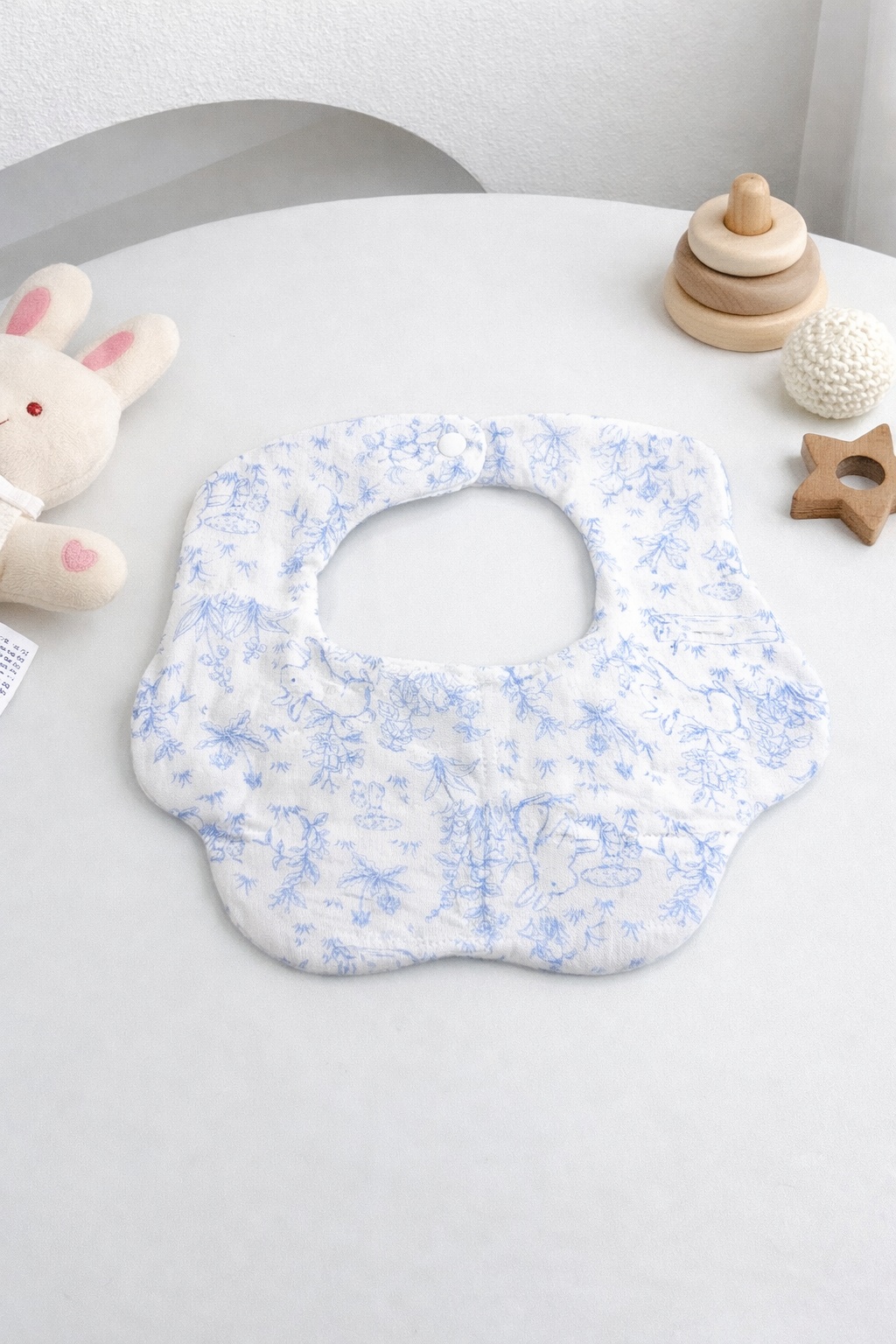
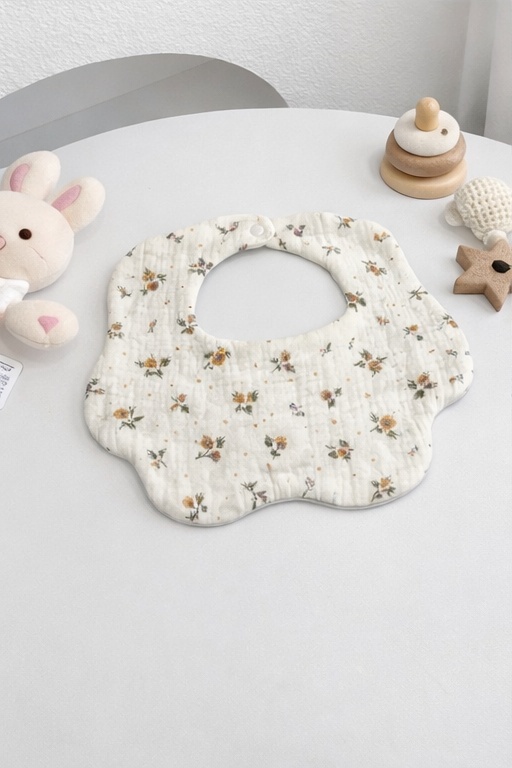
Every AEBaby bib is one size, 100% cotton muslin, with a snap closure and free name embroidery. Here is how we would use them across the size stages.
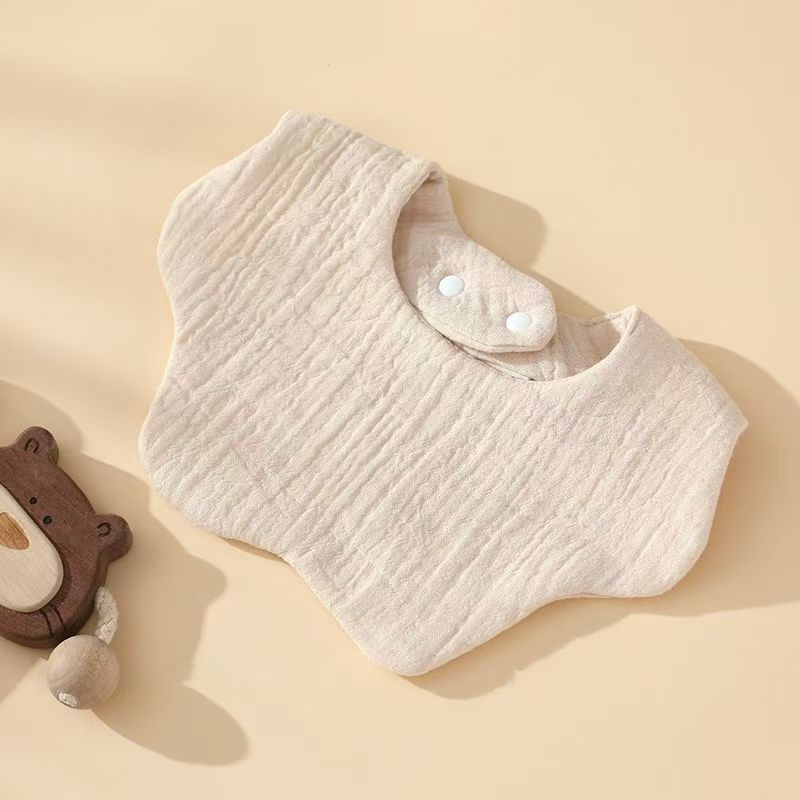
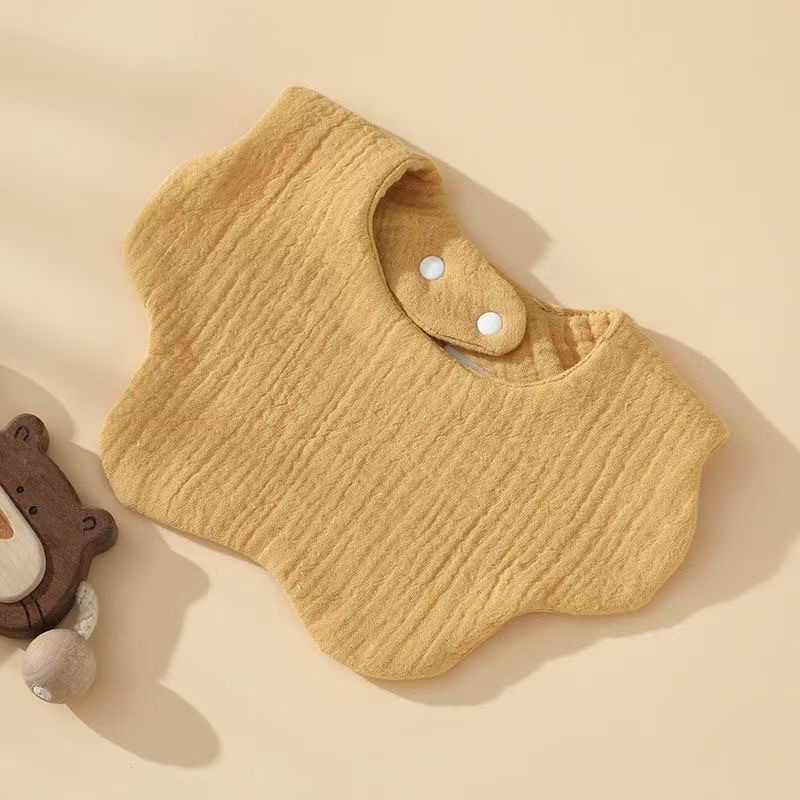
And how many to own at each stage, built up gradually rather than all at once:
| Stage | Muslin drool bibs | Other bibs | AEBaby cost |
|---|---|---|---|
| 0–3 months | 6–8 | — | 8 × S$5.99 = S$47.92 |
| 3–6 months | 10–12 | — | Top up 4 = S$23.96 |
| 6–12 months | 12–14 | 2–3 longer feeding / pocket bibs | Top up 2 = S$11.98 |
| 12–24 months | 8–10 for the molars | 2–3 sleeved smocks | Reuse what you have |
| 2–3 years | 2–4 | Smocks for meals | Reuse what you have |
Shopping for a girl? The pink, blush and floral range is on our baby girl bibs page. Buying as a gift, where the name matters as much as the size? See personalised baby bibs.
FAQ — Baby Bib Sizes
What size bib does a newborn need?
A newborn bib needs a neck opening of roughly 20 to 24 cm and a length of about 15 to 20 cm — enough to cover the upper chest without bunching in the lap of a baby who cannot sit up yet. Fasten it on the tightest snap and check that two fingers slide flat between the neckline and the neck. Newborn bibs are mostly for milk dribble and posseting, so six to eight soft cotton muslin bibs is plenty for the first two months.
Are baby bibs one size fits all?
Drool bibs mostly are, and it works because a baby's neck grows only a few centimetres between birth and age two — an adjustable snap does the sizing. Feeding bibs and smock bibs are more often sized by age, because what changes is the length and the sleeves, not the neck. AEBaby's muslin bibs are one size with a snap closure and are worn from the newborn weeks through teething.
How do I measure my baby for a bib?
Use a soft tape measure, or a piece of string laid against a ruler. Measure around the base of the neck, where a bib sits, over the thin singlet or romper your baby usually wears, keeping the tape snug but not tight. Add about 1.5 to 2 cm and that is the neck opening to look for. For length, measure from the base of the neck to mid-chest for a drool bib, or to the tummy for a feeding bib.
When should I move my baby to a bigger bib?
Size up when the bib is on its loosest snap and still leaves a red line on the neck, or when drool is reaching the clothes below the hem. If food is landing in your baby's lap, you need a longer feeding bib rather than a bigger drool bib — that usually happens around 6 months, when solids start. Around 12 months, a sleeved or pocket bib helps with self-feeding.
What kind of bib does a 1-year-old need?
Two kinds. For meals, a sleeved smock bib or a deep pocket bib, because a one-year-old who is feeding themselves needs arms and lap covered. For the rest of the day, keep a few soft muslin drool bibs — the first molars usually arrive between about 13 and 19 months and bring the drool back. The neck opening of a good adjustable drool bib usually still fits at this age.
Is it safe for my baby to sleep in a bib?
No. Take the bib off for every sleep — naps, night-time, and when your baby dozes off in the car seat or pram. Nothing should be fastened around a baby's neck while they sleep, however well it fits. Bibs are for awake time when an adult is with the baby. If drool rash is a problem overnight, pat the chin and neck dry at bedtime and at night feeds instead.
Do cotton muslin bibs shrink?
Cotton can tighten slightly in a hot wash or a tumble dryer, which is why a bib that fits well out of the packet can feel snugger after a month. Washing at 30 to 40°C and line-drying in the shade keeps the fit steady — and in Singapore a muslin bib dries in a few hours on the rack anyway. AEBaby bibs are pre-washed before they reach you, so most of the settling has already happened.
Final Thoughts
Bib sizing is simpler than the labels make it look. The neck barely changes, so one good adjustable muslin bib covers the drool years — fitted with a two-finger gap and re-checked every month. What changes is the job: short and soft for milk, longer for solids, sleeved for a toddler feeding themselves.
Measure once, fit by feel, take the bib off for every sleep, and add the right type at six and twelve months. That is the whole size guide. 💕
Next: read our complete baby bibs Singapore guide for types and materials, see the best bibs for drooling babies, or browse the full baby bib range.